Transfer orientation
How to mirror a tattoo stencil before printing
Mirror once, at the correct stage, and verify the physical result. Text, faces, symbols, and directional compositions make orientation errors especially visible.
What mirroring changes
Mirroring flips the artwork horizontally. The left side becomes the right side while the top and bottom remain unchanged. This matters because some transfer workflows reverse an image between the digital file, the printed sheet, and the final placement. Other workflows preserve the orientation. The correct setting depends on the complete path, not only the app.
Verify the current printer path
Use a small asymmetric test before printing the finished design. A short readable word, an arrow with a marked left edge, or a simple shape with one distinct side works well. Print it, complete the transfer step, and compare the final orientation with the original reference.
Orientation check
- Mark the intended left and right sides on the source artwork.
- Export a small test with mirroring turned off.
- Print and transfer it through the exact station workflow.
- If the final transfer is reversed, enable mirroring and repeat the test.
- Record the result for that printer, paper, and handoff method.
Mirror after composition decisions
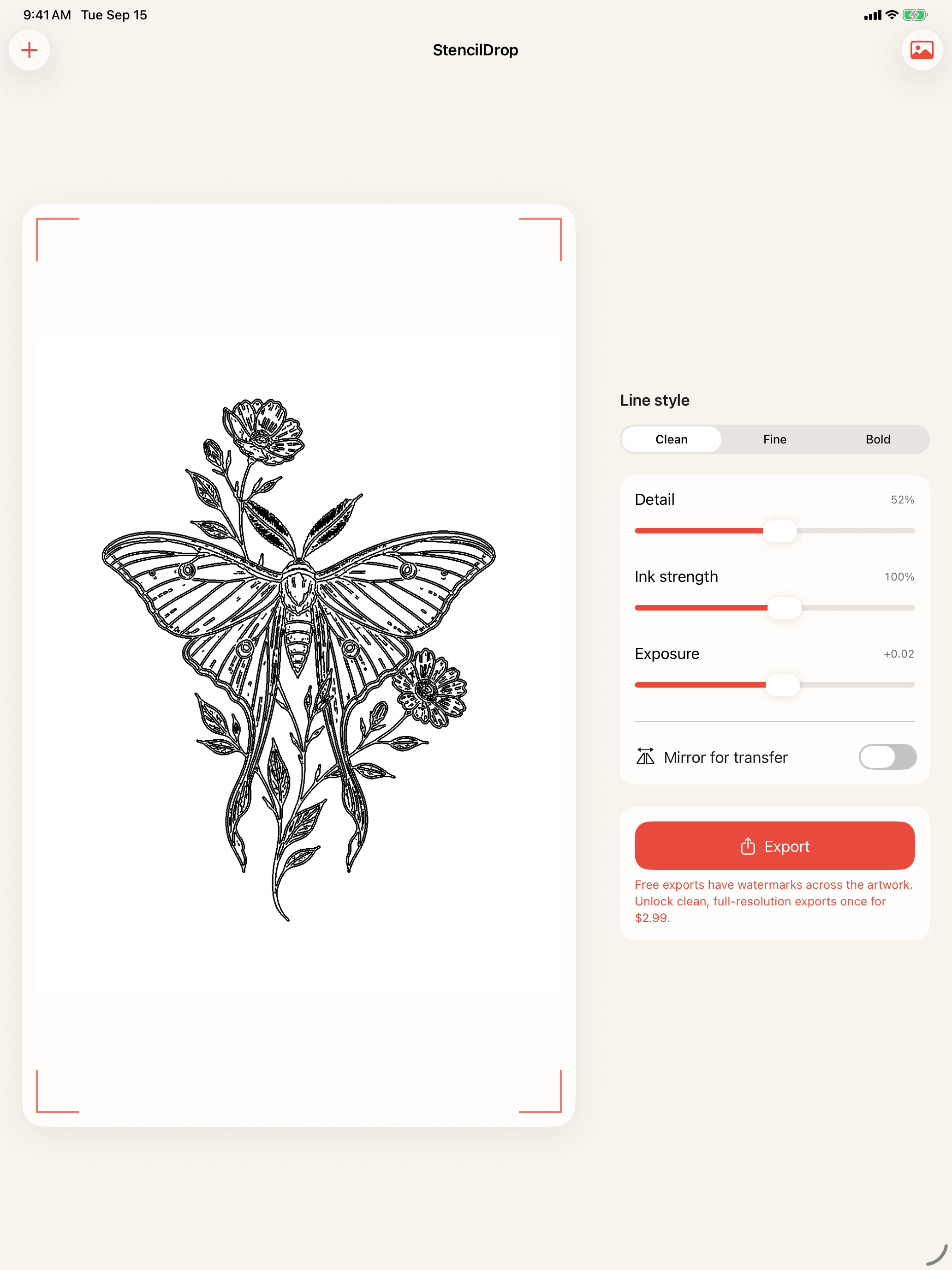
Finish crop, rotation, and line tuning before the final orientation check. Mirroring earlier is not harmful, but it can make visual comparison with the original reference less direct. In StencilDrop, keep the source and output visible, complete the linework, then use the mirror control before export when the tested workflow requires it.
Avoid mirroring twice
A common mistake is flipping the file in the stencil app and again in a printer utility. Two horizontal flips return the artwork to its original orientation. Check every application in the handoff and choose one place to control the final mirror state.
Text is a useful warning sign, but do not rely on text alone. A design without lettering can still have an intended direction based on anatomy, flow, existing work, or client preference.
Check placement, not only readability
A stencil can be readable and still face the wrong direction for the body placement. Compare the final transfer with the approved composition, intended anatomy, and surrounding work. Mirroring is a technical operation, but the correct orientation remains an artistic and placement decision.